
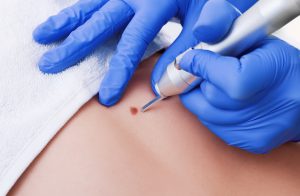
 If you have ever noticed a small wart on your hand, a skin tag under your arm, or a stubborn verruca on the sole of your foot, you may have wondered whether there is a quick and safe way to get rid of it. Cryotherapy is one of the most popular and effective treatments for benign skin lesions, and at The Old Rectory Clinic near Chelmsford, we use it every week to help patients get clearer, smoother skin with minimal fuss.
We get a lot of questions about cryotherapy. In this post, we answer the ones we hear most often, so you can feel confident about what to expect before you book.
What is cryotherapy and how does it work?
Cryotherapy means using extreme cold to destroy unwanted tissue. At our clinic, we use a medical device called the CryoPen, which delivers a precise, controlled stream of nitrous oxide at -89 degrees Celsius directly onto the lesion. This freezes the cells inside it, causing them to break down. Over the following days and weeks, the treated tissue naturally separates from the healthy skin underneath and falls away.
The whole process is quick, accurate, and causes very little damage to the skin around the lesion. It is very different from the freezing sprays you can buy over the counter at a pharmacy, which are far less cold and far less precise.
What skin conditions can cryotherapy treat?
Our cryotherapy and cautery treatment covers a wide range of benign skin lesions. The most common ones we treat include:
| Condition | How Cryotherapy Helps |
|---|---|
| Warts | Freezes and destroys the infected skin cells caused by HPV |
| Verrucas | Targets the lesion on the sole of the foot without harming surrounding tissue |
| Skin tags | Removes the small soft growths quickly and cleanly |
| Age spots | Reduces pigmented patches caused by sun exposure |
| Solar keratoses | Treats rough, scaly patches that develop from UV damage |
The key point is that all lesions must be assessed by a doctor before treatment. We confirm that each one is benign and appropriate for cryotherapy before we begin.
Is cryotherapy the same as what the NHS offers?
The NHS does offer cryotherapy for warts and verrucas, but access is increasingly limited. According to the NHS information page on warts and verrucas, NHS cryotherapy is not always available through GP practices, and waiting times can be long. Seeing us privately means you can be seen quickly, assessed by a doctor, and treated in a calm, unhurried environment.
Does cryotherapy hurt?
Most patients describe the sensation as a brief, sharp cold feeling, a bit like pressing an ice cube against the skin for a second or two. There may be mild tingling or a slight stinging sensation immediately afterwards. For most people, this passes within a few minutes.
The CryoPen is designed to be as comfortable as possible. Because it targets only the lesion itself, the surrounding healthy skin is left alone, which reduces irritation during and after the procedure.
How is CryoPen different from over-the-counter freezing treatments?
Pharmacy freezing products typically reach around -57 degrees Celsius, whereas the CryoPen reaches -89 degrees Celsius. This difference matters because a colder temperature destroys the lesion more effectively and in a shorter time. Over-the-counter products also cannot control precisely where the cold is applied, which can mean damage to healthy skin or less effective results on the lesion itself.
At our clinic, the treatment is delivered by a trained medical practitioner who can adjust the depth and duration of the freeze to suit the size and type of your lesion.
How many sessions will I need?
It depends on the size and type of the lesion. Some warts and skin tags respond to a single session. Others, particularly larger or deeper ones, may need two or three treatments spaced a few weeks apart. We will give you a realistic idea of what to expect at your consultation, so there are no surprises.
Can cryotherapy remove moles?
This is one of the most common questions we receive, and the answer is an important one: we do not use cryotherapy to remove moles. Moles need to be properly assessed first by a doctor to check they are safe and not suspicious. If a mole is suitable for removal, it is usually done via a different procedure. We offer mole checks at the clinic to make sure any concerning mole is assessed correctly and referred if needed.
Is it safe for all skin types?
Cryotherapy is suitable for most skin types, but some people need extra care. Those with darker skin tones may be at a slightly higher risk of temporary pigmentation changes after treatment, so we always discuss this at consultation. People with certain medical conditions, including poor circulation or cold sensitivity, may not be suitable candidates. This is why a proper medical assessment before treatment is so important.
Can cryotherapy treat skin tags?
Yes. Skin tag removal is one of the most frequent reasons patients come to us. Skin tags are harmless, soft, and often form where skin rubs against skin or clothing. They can be treated very quickly with cryotherapy, and most patients notice the tag has gone within one to two weeks of their appointment.
Can cryotherapy treat warts on the feet (verrucas)?
Yes, verrucas respond well to cryotherapy, and it is one of the most effective clinical treatments available for them. Our wart removal service covers both warts and verrucas on the hands and feet. Verrucas can be stubborn because the pressure of walking flattens them into the skin, which means they may need more than one session to clear fully.
Will cryotherapy leave a scar?
When carried out by an experienced medical practitioner, cryotherapy rarely causes lasting scarring. You may notice some redness, a small blister, or a scab as the skin heals, all of which are normal and part of the healing process. Following our aftercare guidance helps the skin recover as cleanly as possible.
What aftercare is needed?
After treatment, we recommend keeping the area clean and dry, avoiding picking at any crust or blister, protecting the skin from direct sunlight, and avoiding swimming or intense exercise for a few days. We provide full written aftercare instructions at your appointment and are available to answer questions during your recovery.
Why choose a medical clinic for cryotherapy in Essex?
Cryotherapy may sound simple, but correct diagnosis and precise application are essential for safe and effective results. At The Old Rectory Clinic, every treatment is carried out by a qualified doctor or experienced clinical practitioner. We assess each lesion individually, confirm it is suitable for treatment, and tailor the procedure to your specific needs.
We are based in Great Leighs, just outside Chelmsford, in a beautiful Georgian Rectory that is a world away from a busy high-street clinic. If you have a lesion that is bothering you, we would be happy to take a look and talk you through your options.
Book a consultation today and take the first step towards clearer skin.
